
Getting started
How AI engines decide which brands to name
What shapes the brands an AI engine names: what it learned, what it searches, the pages it reads and the question's wording. And what you can do.

The same buyer question can get a different AI answer in each country. Why, which engines take a country, and how to read your standing where you sell.
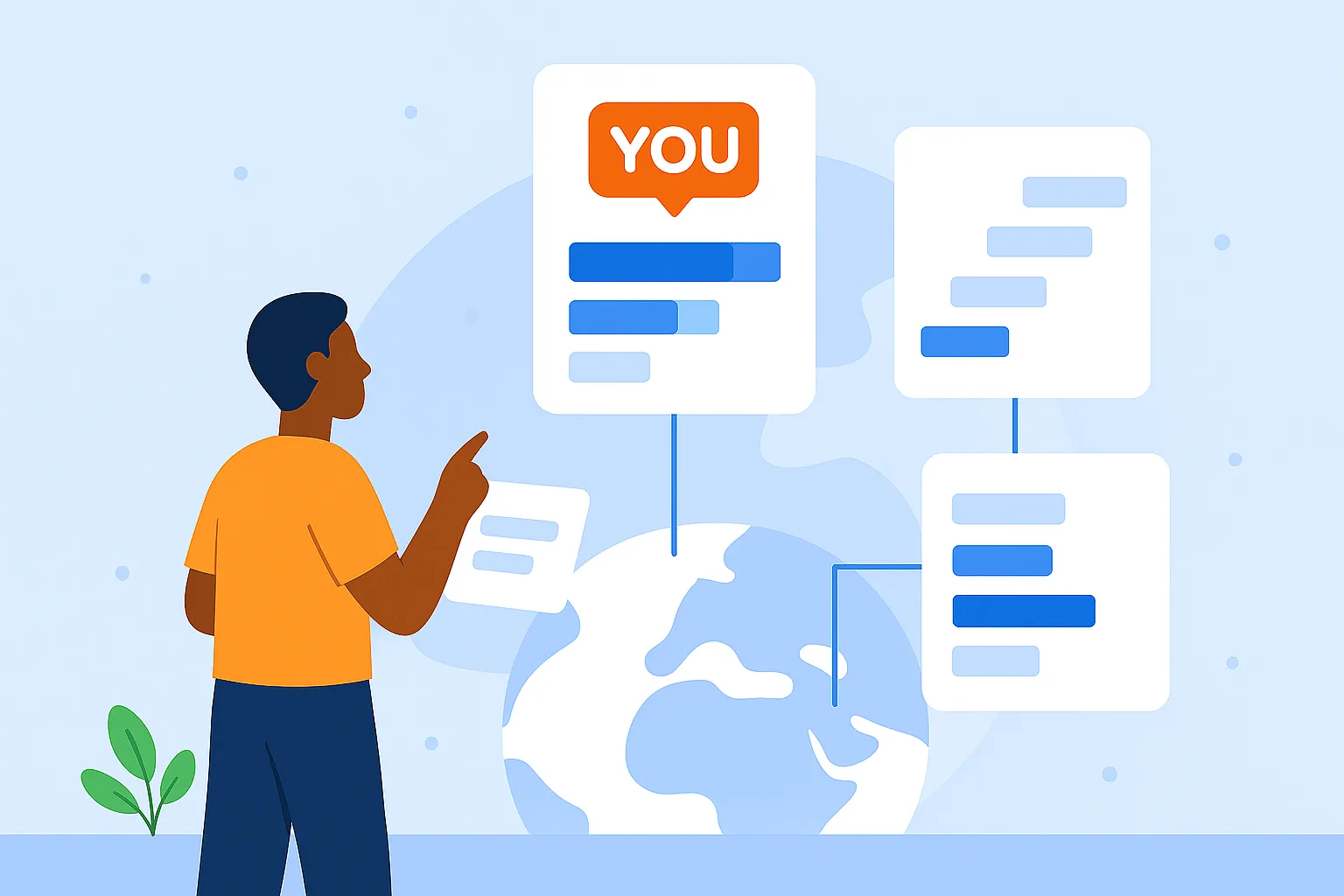
Ask an AI assistant which payroll tool to buy, and a buyer in London can read a different list from a buyer in Chicago. The question is word for word the same. The answer names other brands, cites other pages, and can put you first in one country and leave you out in another. If you sell in more than one market, or in a market other than the one your team sits in, the answers that count are the ones your buyers read where they are. This post explains why answers change from country to country, which engines take a country into account, and how to read your standing in the market you sell to.
An AI engine does not keep one fixed answer per question. It writes a fresh one each time, and where the buyer is shapes what goes into it.
The pages it reads are local. Many answers are written after the engine searches the web, and search results depend on where the search comes from. A search made from Germany can turn up review sites, trade press and brand pages aimed at Germany. The pages an answer is built from decide which brands it names.
The rivals are local. A brand that leads your category at home may be small or absent elsewhere, and a rival you never meet at home may be the name every local page mentions. An engine that answers for a market tends to name the brands that market talks about.
What is on offer differs. Prices, plans, currencies, rules and availability change by country. An answer for a market draws on pages about that market, so a product those pages leave out has less to be named from.
The question means something different. "Best accounting software for a small business" has different right answers in countries with different tax systems. The engine tries to answer for the place the question comes from.
So your standing is a standing in a market, and a reading taken from one country tells you about that country.
BotSay asks every question on six engines: ChatGPT, Perplexity, Gemini, Claude, Google AI Overviews and Google AI Mode. Five of them can be pointed at a country: ChatGPT, Perplexity, Claude, Google AI Overviews and Google AI Mode. For those five, BotSay asks each question as the country you choose for it, so their answers are the ones a buyer there would read.
Gemini cannot be pointed at a country, so it answers for everywhere. Its numbers are not specific to any market. Read them as a general view of how Gemini sees your category, and give more weight to the other five when the question is about one market.
The brands named in a week's answers, and your share among them, can change from one market to the next. A share of voice read as the United States can look very different read as the United Kingdom, with other rivals in the list and other pages behind them.
Pick the country by where your buyers are, not where your office is. A software company in Toronto that sells mostly to American firms should read its standing as the United States. A UK software firm whose buyers are mostly in Germany should read as Germany.
In BotSay, each question has its own country, the United States unless you choose another. When you press Add questions, pick the Country for the questions you are adding, typed or from a file. Once any question is asked outside the United States, the Questions list shows each question's country and lets you filter by it (Ask a question in another country). BotSay sends each engine the text of the question and, usually, a two-letter country code. Nothing else about you or your account goes with it (Your data).
A country setting changes where a question is asked from. It does not change the words, and every question is asked in English. Use the English terms buyers in that market use.
What is the best payroll software for a 20-person company?
Which payroll software handles tips for restaurant staff?
Is Tessera or Novaly better for a restaurant group?
What are the best alternatives to Novaly?
How do I pay staff who work in more than one state?
Example, using an invented brand
Keep the list to questions buyers in that market would ask.
A question asked as one country and the same words asked as another get different answers. The answers come from different pages and name different rivals, so mixing them would tell you about the change of country, not about your brand.
So BotSay treats them as two questions. Change country on a question works like Reword: it stops the question, keeps its answers with the country they were asked in, and asks the same words in the new country as a new question from the next reading. Your history stays clean, and no answer from one country is counted as another's.
Read each question's answers as a picture of its market, and your five measures as a picture of the markets you ask in: Mention rate, Share of voice, Average rank, Your pages cited and Sentiment. Each tells you where you stand with buyers there, and the work it points to is local work: the local review sites to be listed on, the local pages to write, the local rivals to answer.
If you sell in two markets, ask your key questions in each, written the way buyers there ask. A rise at home does not mean a rise abroad, and the Country filter on the Questions list shows one market's questions on their own.
Getting started
What shapes the brands an AI engine names: what it learned, what it searches, the pages it reads and the question's wording. And what you can do.
Getting started
What your SEO work already gives you in AI answers, what changes when engines name brands instead of ranking links, and how to measure it.

Getting started
What your first AI visibility reading shows, how to read it as a starting point, and the first pieces of work to pick up before the second reading.
Your first results arrive right after setup
Monthly plans from $59. Cancel at any time.