
Measures
AI visibility results: how to tell if a page worked
How to compare AI answers before and after a page goes live, read the result with confidence, and know what a steady reading tells you.

Which kinds of pages AI answers link to, how to read the sources behind your buyers' questions, and the pages and places that earn you a link.
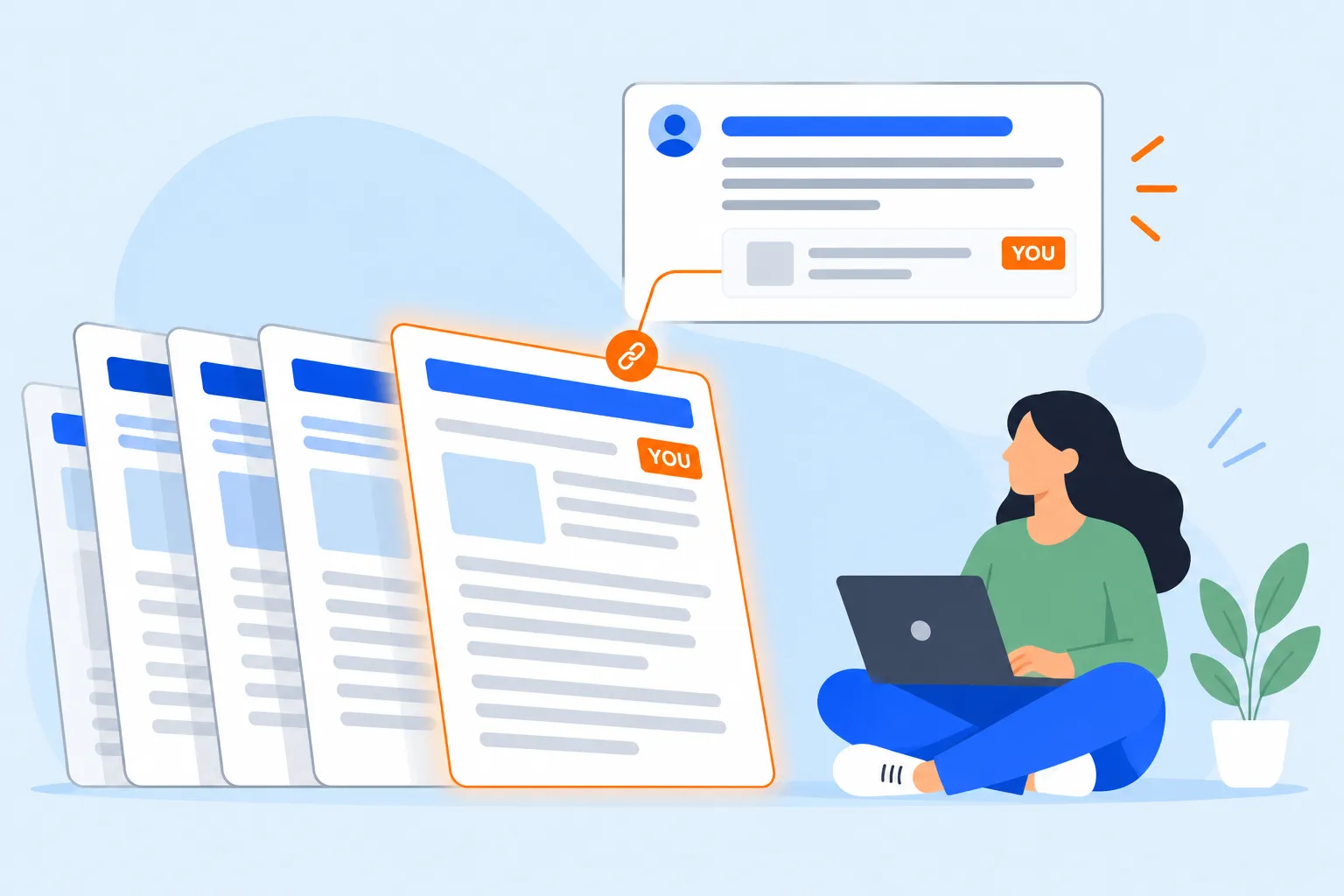
When an AI assistant answers a buyer's question, the answer can link to the pages it leaned on. After being named, a link is the next thing to win. This guide shows how to find the pages cited for your own questions, and how to get yours into that set.
Being named in an answer puts you on the buyer's shortlist. Being cited means the engine linked to one of your pages as a source, and we track that separately.
We measure it as Your pages cited: of every link the answers gave, the share that pointed at your sites.
A citation gives the buyer a path from the answer to your site, where they read your own words first.
You can be named without being cited. An engine may name you on the strength of a review site and link to that site instead, so the buyer's next click goes there.
The same kinds of page keep coming up:
Which kinds lead depends on the question, so build your list from the questions you track rather than from the web in general.
Take the questions you track, or write ten your buyers ask. Ask each one on ChatGPT, Perplexity, Gemini, Claude, Google AI Overviews and Google AI Mode, and note down the pages the answers linked to. Then put each page in one of three groups.
Count how often each page comes up. Pages that recur across engines and questions are the ones the engines go back to for your topic. The example below sorts one week's cited pages into those groups, and everyone else.
Example, using an invented brand
Also look at what the engine searched for. We ask every engine with web search switched on where it offers it, and for every answer, BotSay shows the searches the engine ran to write it, beside the pages it cited (see the product). Those searches are the words the engine went looking for, and a page of yours can answer them. The example below shows the searches behind one answer.
What is the best payroll software for a 20-person company?
Its answer cited 7 pages.
Example, using an invented brand
Start with the rows where a rival's page is cited for a question you want to win. Open the rival's page next to the answer and look at how it is built. Does it put the buyer's question in a heading, answer it in the first lines, and back the answer with specifics such as what the product does, who it suits, what it connects to and what it costs?
Then write your own page for that question:
Your pricing, docs and comparison pages are the place to begin, because they answer the questions buyers ask while they are choosing.
Once you confirm which sites are yours and your rivals', BotSay does the sorting for you each week and hands you pages to write and places to be mentioned, ranked by how many questions each could win, with the evidence behind every one.
You cannot write the pages in the third group, though you can get your product onto them.
Go first to the places cited most often for the questions you most want to win.
When a page goes live, or a listing lands, note the date. Then keep asking the same questions the same way every week, and watch whether the new page shows up among the sources and whether Your pages cited rises.
A share counted from a handful of links can move on a single reply, so write down the number of links it came from. Before you call it a win, look for a change that holds over several weeks. Keep an eye on the answers that name you as well.
BotSay asks your questions every week, through each provider's official developer access or a licensed search-data provider, counts the links, and shows Your pages cited: the week's figure and how far it moved. Mention rate is the measure BotSay tests: it comes with the number of answers behind it and a likely range, and BotSay calls a change real only once it is bigger than the uncertainty in both weeks' readings put together. Your reading arrives in the weekly email.
Our page How we measure sets out the method, and Is my AI visibility score real? shows how to check a change yourself.
Measures
How to compare AI answers before and after a page goes live, read the result with confidence, and know what a steady reading tells you.

Measures
What Sentiment measures in AI answers, how to read the quotes behind it, and the pages and listings to fix when an engine describes you poorly.

Measures
What Average rank counts in AI answers, why it can slip in a good week, how to read it beside Mention rate, and the work that moves you up the list.
Your first reading runs right after setup
Monthly plans from $59. Cancel at any time.